Brasilian
Brazilians (Portuguese: brasileiros, pronounced [bɾaziˈle(j)ɾus]) are citizens and people associated with Brazil. This connection can be historic, cultural or legal. For most Brazilians several (or all) of these connections exist and are all sources of their Brazilian identity, sharing a common culture, language and in many cases history and/or ancestry.
Brazil is a multiethnic society, which means that it is home to people of many ethnic origins.
Being Brazilian is a civic and cultural phenomenon, rather than an ethnic one. As a result, the degree to which Brazilian citizens identify with their ancestral roots varies significantly depending on the individual, the region of the country, and the specific ethnic origins in question. Most often, however, the idea of ethnicity as it is understood in the anglophone world is not popular in the country.
After the colonization of Brazil by Portugal, most of the 16th century, the word "Brazilian" was given to the Portuguese merchants of the Brazilwood tree, designating exclusively the name of such profession, since the inhabitants of the land were, in most of them, indigenous, or Portuguese born in Portugal or in the territory now called Brazil.
However, long before the independence of Brazil, in 1822, both in Brazil and in Portugal, it was already common to assign the Brazilian gentilic to a person, usually of clear Portuguese descent, resident or whose family resided in the State of Brazil (1530–1815), belonging to the Portuguese Empire. During the lifetime of the United Kingdom of Portugal, Brazil and the Algarves (1815–1822), however, there was confusion about the nomenclature.
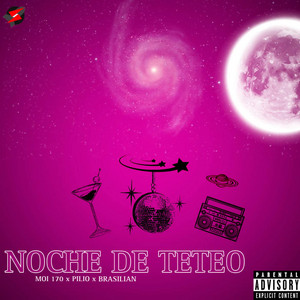
Noche de teteo
- 2024-01-12T00:00:00.000000Z
Si supieras
- 2023-07-08T00:00:00.000000Z
Similar Artists